Guy Thompson's coerced complicity
Dead ShotGuy Thompson's coerced complicity is both a personal compromise and an information system. Having been paid to treat Statenville as a sleepy, harmless town, Guy helps contain the story of three suspicious teenage deaths, restrains his reporters, and protects the official version of events. Yet the deaths force his dormant editorial conscience back into conflict with the arrangement that supports his life, making his silence increasingly unstable and finally turning his private complicity into a choice about whether to protect people or protect the secret.
The bargain behind the quiet town
Guy had left The Tribune seven years earlier because he was tired of crime, corruption, deadline pressure, and the possibility that a young reporter’s mistake could cost him his job. Statenville offered the opposite life: Rotary Club dinners, Garden Club photographs, and mayoral elections instead of daily danger. The town’s calm was not innocent, however. Before the three deaths, Guy learned that Statenville possessed what the narrative calls a “hallowed secret,” although he did not know its full nature. He was paid handsomely not to investigate it.
The payment was concrete and ritualized. Every month, a brown paper bag appeared on Guy’s back porch containing one hundred twenty-dollar bills. Guy counted the money each time. He had not accumulated enough savings for retirement, and the proposition had been presented in a way that made refusal seem dangerous: he could accept the money and pretend Statenville was genuinely peaceful, or leave and hope another town’s secret was less toxic. He chose the first option, rationalizing that the secret could not matter much because nothing worth investigating had yet reached his desk.
That arrangement made Guy more than a passive recipient of protection money. When whispers came to him—the kind of information he had once wanted while working in Salt Lake City—he acted as though he could not hear them. Townspeople who suspected that he knew the secret respected him for remaining silent. His silence became a credential of belonging, and the editor was absorbed into the community’s culture of containment.
The deaths break the arrangement
The deaths of three young men in a single day shattered Guy’s carefully limited version of peace. The official account reduced the cases to drug overdoses. Sheriff Jones identified the third victim as Devin Reid and insisted that the deaths were not murders, while acknowledging that methamphetamine had been found at all three scenes. The sheriff’s language gave the paper a usable official story while postponing any deeper inquiry until toxicology reports returned from Boise.
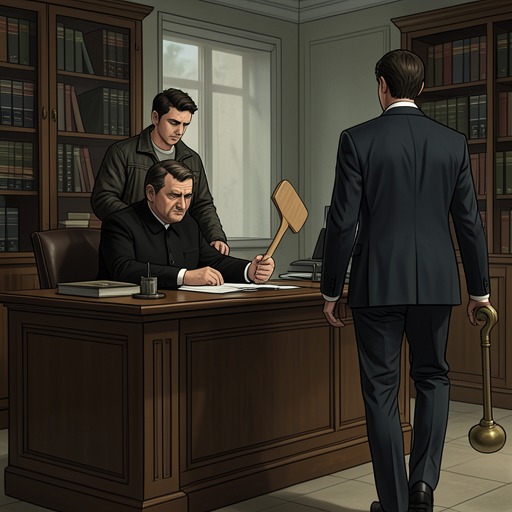
The medical evidence was more disturbing. Kevin Mendoza saw extensive clawlike slashes across Cody Murray’s torso, legs, arms, and face; no part of the body was clear. He initially believed the victims had bled to death. Instead, pressure forced him to declare that they had overdosed, cancel the toxicology screens, and prepare a false report for the Sheriff’s Department and the media. Kevin kept the original report beneath his clipboard and secretly retained his own curiosity, but the public record was being rewritten before the investigation was complete.
Guy understood that the deaths might be connected to Statenville’s hidden order. The truth, in his formulation, was trying to get out literally through dying bodies. He wondered whether he could reveal the secret once it was confirmed, even if doing so meant surrendering the monthly money or facing something worse. The question was not merely whether Guy knew enough to publish; it was whether he could continue suppressing the instincts that had made him a newspaperman.
Editorial control as containment
Guy’s complicity operates through the newsroom as much as through private payment. He tells Cal Murphy to go to the sheriff’s office, obtain whatever Jones will provide, and report back, while insisting that Kelly Mendoza remain with him to produce a dominant photograph for Wednesday’s paper. The assignment appears to support reporting, but Guy is also managing the form in which the story will reach readers: official comment, controlled photography, and a carefully framed edition.
As Cal and Kelly continue asking questions, Guy is warned to keep them under control. He assures the caller that he has done so, although the assurance is a lie. He knows that sidelining them could provoke resistance, and he recognizes that Cal is not pursuing a fanciful conspiracy. Still, Guy changes Cal’s assignment to a reaction piece, a shallow article built from public responses rather than independent investigation. The reassignment crushes the possibility of the Pulitzer-level story Cal had imagined and converts journalism into transcription.
Guy’s pressure is driven by more than managerial irritation. Mr. Mendoza repeatedly orders him to tone down coverage of the teenagers’ deaths, leaving Guy feeling like an editor with no real decisions to make. Cal’s calls go unanswered, and Guy knows that a direct command to stop pursuing a story exposing deep corruption conflicts with every serious journalistic instinct Cal possesses. Guy also understands the danger: Cal will not stop, and the editor fears that the pursuit of truth may end in his reporter’s death.
Complicity meets responsibility
The conflict becomes personal when Cal and Kelly are targeted rather than merely censored. Cal is arrested on fabricated charges of possessing an open container and driving under the influence, despite knowing that he had not been drinking or driving with alcohol in the car. He recognizes the arrest as an intimidation tactic designed to punish his investigation. Later, Sheriff Jones dispatches Jake Dawkins and Willie Warren to Walker’s house after receiving a tip about the fugitives, using a supposed disturbance as the pretext for another arrest attempt.
Guy is also drawn into the threat through a warning letter read by Cal. The letter calls Cal an important ally, orders him to keep the previous night’s events secret, and directs him to create a cover story. It promises information capable of placing him in the national spotlight while warning that refusal will bring other forms of persuasion. Cal is specifically told not to show the letter to Kelly or Guy, revealing how thoroughly the forces behind the secret understand the relationships through which information might circulate.
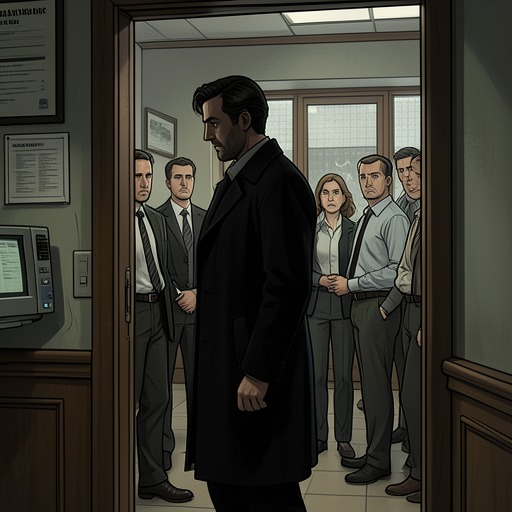
When Guy is told that Cal and Kelly must be fired, his response marks a decisive change. He might once have welcomed the chance to remove the two reporters who had become the greatest complications of his working life. Instead, he stops to consider whether his complicity will lead to their deaths and whether a monthly sack of money is worth having their blood on his hands. He does not immediately become free of the bargain; he chooses diplomacy as a way to survive long enough to decide whether to strike back. His resistance therefore remains cautious, compromised, and strategic rather than heroic in a simple sense.
From gatekeeper to participant in disclosure
Guy’s state is defined by contradiction. He is a gatekeeper who knows that information must be managed, yet he is also a journalist who understands that suppressing a major story falsifies the community’s reality. He protects the official claim that the teenagers died from overdoses even as the bodies, the canceled toxicology tests, and the concealed medical findings contradict it. He disciplines Cal while privately recognizing that Cal’s persistence is justified. He promises control to the people enforcing silence while considering how to preserve the reporters he has endangered.
The later publication of Cal’s story in two newspapers the next day indicates that the information Guy once helped contain ultimately reaches a broader public record. The evidence does not erase Guy’s earlier payments, lies, or editorial interference, and it does not establish that his change of heart alone produced the article. What it does establish is the collapse of his old role. Guy’s silence had helped maintain Statenville’s appearance of peace; once the deaths and the suppression surrounding them become impossible to ignore, that silence can no longer function as a stable professional or moral position.
Guy’s coerced complicity therefore gives the novel’s corruption a human mechanism. Statenville’s secret survives not only through overt threats, false arrests, altered medical reports, and commands from powerful figures, but also through an editor who accepts money, repeats reassurances, redirects a reporter, and persuades himself that the arrangement is temporary or harmless. The deaths turn those small acts of containment into a reckoning. His central movement is not from innocence to guilt, but from rationalized participation toward an uncertain willingness to risk the consequences of telling the truth.